


 (718) 230-5046
Key Takeaways
- There are two main categories of retainers: removable retainers and fixed retainers. Both are designed to help keep teeth in their corrected positions after orthodontic treatment.
- Retainers are an important part of maintaining results after braces or Invisalign, and patients should wear them as directed by their orthodontist.
- The right retainer option depends on your orthodontic needs and your doctor’s recommendation.
- At Scantlebury Orthodontics in Brooklyn, patients receive guidance on post-treatment care and retention after orthodontic treatment.
What Are Dental Retainers?
When braces come off or you finish your last Invisalign tray, it feels like the finish line. But here’s the truth: your orthodontic treatment isn’t truly complete without a plan for retention. Retainers are the final, long-term step that protects everything you and your orthodontist worked to achieve.
A retainer is a custom made appliance typically made from plastic, acrylic, or metal wire designed to hold your teeth straight in their corrected positions. Without one, your teeth tend to drift back toward their original positions over time.
Why does this happen? After active orthodontic treatment, the bone and periodontal ligaments surrounding your teeth remain somewhat “soft” and adaptable. This remodeling phase can last months to years. During this window, the periodontal fibers around teeth can retain some elastic memory that encourages teeth to shift back. Retainers prevent that unwanted movement.
Retainers are used after both traditional braces and clear aligners like Invisalign, including Invisalign Teen. Regardless of which treatment plan got you here, retention is essential.
After orthodontic treatment, retainers are used to help maintain the results that have been achieved. Your orthodontist will recommend the type of retainer and instructions that best fit your treatment needs.
Types of Retainers at a Glance
There are two main types of retainers: removable retainers and fixed retainers. Removable retainers can be taken out for eating and cleaning, while fixed retainers are attached to the teeth and stay in place. Both options are intended to help keep teeth from shifting after orthodontic treatment. Your orthodontist may recommend one type based on your specific smile and treatment history.
Removable Retainers
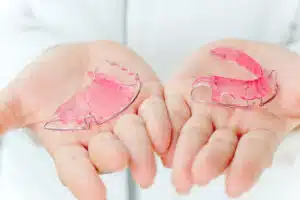
Removable retainers are designed to help hold teeth in position after orthodontic treatment while still allowing patients to take them out for meals and daily cleaning. Because they are removable, they need to be worn consistently as directed in order to be effective. These retainers can be a convenient option for many patients, depending on their orthodontic needs and daily habits.
At Scantlebury Orthodontics, removable retainers are commonly recommended after both braces and Invisalign for teens and adults, especially when appearance and comfort are priorities. Dr. Scantlebury will help you choose among the retainer options based on your unique needs.
Let’s look at the three main types of removable retainers: Hawley, Essix/clear, and Vivera, which all play an important role in post-Invisalign care for your teeth.
Hawley (Traditional) Retainers
Some removable retainers use a combination of acrylic and wire to help maintain tooth position after treatment. These appliances have long been used in orthodontics and may be recommended in some cases based on the patient’s needs. Your orthodontist can explain whether this type of retainer is appropriate for your treatment plan.
Essix and Other Clear Plastic Retainers
Some removable retainers are made from clear plastic and are designed to fit closely over the teeth. These retainers offer a more discreet appearance and can be a comfortable option for many patients. Because plastic retainers can wear down or become damaged over time, patients should follow their orthodontist’s care instructions and contact the office if the retainer no longer fits properly.
Vivera Retainers from Invisalign
Some patients may receive clear retainers after Invisalign treatment to help maintain their results. These retainers are designed to keep teeth in position after aligner therapy is complete. If you have completed Invisalign treatment, your orthodontist can explain the retention options recommended for your smile.
Fixed (Permanent) Retainers

Fixed retainers are attached to the back surfaces of the teeth and remain in place to help prevent shifting after orthodontic treatment. Because they stay on the teeth, they do not depend on the patient remembering to put them in. However, they also require careful cleaning and regular monitoring to make sure they remain in good condition.
At Scantlebury Orthodontics, many patients receive a bonded lower retainer plus a removable clear upper retainer combining constant protection on the bottom with flexible nighttime wear on top, all supervised by Dr. Sophia Scantlebury.
If you have a fixed retainer, it’s essential to continue regular dental cleanings. Always tell your dental professional or hygienist that you have a bonded retainer so they can clean the area thoroughly and check for any issues.
How Orthodontists Choose the Right Retainer
There is no single retainer option that is right for every patient. The best choice depends on your orthodontic treatment, the condition of your teeth and bite, and your orthodontist’s recommendation. During the end of treatment, your orthodontist can explain which type of retainer is most appropriate and how to care for it properly.
How Long You Need to Wear a Retainer
Modern orthodontics recommends lifelong nighttime wear to maintain results. Why? Because teeth can shift at any age due to aging, chewing forces, and changes in gums and bone.
Here’s a typical retention schedule:
- Full-time wear (first few months): Most patients wear their retainer 20–22 hours per day immediately after braces are removed or Invisalign is completed. This gives bone time to solidify around the new positions.
- Transition to nighttime wear: After the initial phase, most patients shift to wearing retainers only at night, as directed by their orthodontist.
- Long-term maintenance: Indefinite nighttime wear—often at least several nights per week—is the goal for maintaining a beautiful smile for life.
The first 6–12 months after treatment are the most critical because bone is still remodeling around your teeth’s new positions. If your retainer feels suddenly tighter after missed nights, that’s a sign your teeth are already starting to shift slightly. Resume full-time wear and contact your orthodontist immediately.
At Scantlebury Orthodontics, patients receive written and verbal instructions for their specific schedule, and follow-up visits confirm teeth are staying stable.
Living With and Caring for Your Retainer
 Good retainer care can significantly extend the life of your appliance—and protect both your smile and your gums, which aligns with the practice’s mission and patient-centered policies. Here’s what you need to know.
Removable Retainer Care
- Storage: Always store your retainer in a ventilated retainer case when it’s not in your mouth. Never wrap it in a napkin (it will get thrown away) or leave it loose in a pocket or bag.
- Keep away from heat: Hot water, dishwashers, and direct sunlight can warp plastic retainers. Stick to cool or lukewarm water only.
- Keep away from pets: Dogs especially love to chew on retainers—it’s one of the most common reasons for needing a new retainer.
Cleaning tips:
- Gently brush your retainer with a soft toothbrush and mild liquid soap
- Rinse with cool water
- Consider weekly soaking in a retainer or aligner cleaning solution if recommended by your orthodontist
- Avoid abrasive toothpaste, which can scratch clear retainers and make them cloudy
Fixed Retainer Care
- Floss daily around the wire using floss threaders, super floss, or interdental brushes
- Brush carefully around the bonded areas
- Continue regular professional cleanings—tell your hygienist you have a bonded retainer so they pay extra attention to that area.
- Avoid biting directly on very hard foods with your front teeth to reduce risk of wire breakage
When to contact your orthodontist: If your retainer cracks, warps, feels loose, or no longer fits snugly, reach out right away. Delays may mean your teeth need additional movement or a new appliance entirely, and some situations may even qualify as orthodontic emergencies that require prompt attention.
When to Contact Scantlebury Orthodontics
Any sudden change in fit, discomfort, or visible damage to your retainer is a reason to call the office promptly—don’t wait for your next routine appointment.
Contact us if you experience:
- Retainer lost or accidentally thrown away
- Chewed or cracked clear retainer
- Bonded wire that feels sharp, loose, or detached from a tooth
- Noticeable shifting of front teeth
- Excess saliva production or irritation from a new retainer that doesn’t resolve
Early intervention can often prevent the need to restart major dental work or orthodontic treatment, saving you time and overall cost.
Brooklyn-area readers—whether you’re in Park Slope, Prospect Heights, Brooklyn Heights, or nearby neighborhoods—are welcome to schedule an appointment or free virtual consultation if you have questions about your current retainer.
Did you finish treatment elsewhere? If you need a new retainer or replacement retainers, Scantlebury Orthodontics can help. Request an appointment for an assessment and personalized retainer plan. Protecting your healthy smile is always worth it.
FAQ: Types of Retainers and Everyday Concerns
Can I switch from a Hawley retainer to a clear retainer later?
Yes, many patients can switch retainer types if their teeth are still stable and the orthodontist confirms good alignment. The process usually involves a new exam, fresh dental impressions or a digital scan, and fabrication of new clear retainers.
There is typically an additional cost for new retainers, and dental insurance coverage varies, so ask about fees in advance. Dr. Scantlebury reviews the pros and cons before switching to ensure expectations are realistic and retention will remain effective.
Can my retainer act as a night guard for teeth grinding?
Standard orthodontic retainers are not always designed to absorb heavy grinding forces long-term. Some patients may be given sturdier options (like Vivera) that tolerate clenching better, but severe grinders may still need a dedicated night guard.
Discuss any grinding or jaw discomfort with your orthodontist or dental professional so the retainer and any night guard can be planned together. At Scantlebury Orthodontics, patients who grind are evaluated individually to choose a safe, durable retention strategy and can contact the office directly for guidance.
Do I have to take my retainer out when eating or drinking?
Removable retainers should always be taken out for meals and snacks to avoid cracking, staining, or trapping food against your teeth. Plain water is usually fine with clear retainers in place, but hot drinks, soda, coffee, tea, and colored beverages can stain or warp them.
Place your retainer in its case during meals and brush or rinse both your teeth and retainer before putting it back in.
Fixed retainers stay in while eating, but avoid biting directly on very hard foods with the bonded teeth to reduce risk of wire breakage.
What happens if I stop wearing my retainer after a few years?
Teeth can shift slowly over time due to aging, chewing forces, and changes in gums and bone—even many years after braces or Invisalign. If you stop wearing retainers, you may notice crowding, rotated teeth, or bite changes, especially in the lower front teeth.
If your retainer no longer fits after a break from wearing it, don’t force it—this can damage your teeth. Instead, schedule an orthodontic evaluation. Scantlebury Orthodontics frequently sees adults returning years after treatment and can discuss minor “touch-up” treatment.
Can I get a new retainer if my braces or Invisalign were done elsewhere?
Absolutely. Many orthodontic practices, including Scantlebury Orthodontics in Brooklyn, regularly provide replacement retainers for patients who completed treatment with other retainers or other providers.
The typical process includes a consultation, exam, possibly new X-rays or photos, digital scans or new impressions, and fabrication of a new removable or fixed retainer. Bring any old records or your last retainer if available—this helps the orthodontist understand your original alignment.
If you’ve lost or broken your retainers, even years later, book a visit to protect your new smile and avoid more extensive treatment down the road. Your insurance provider may cover part of the cost, so check your benefits before your appointment.